Skip to product information
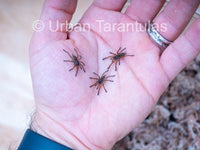
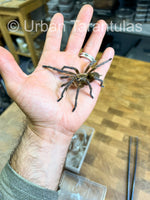
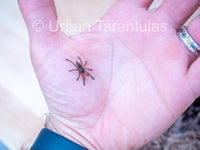
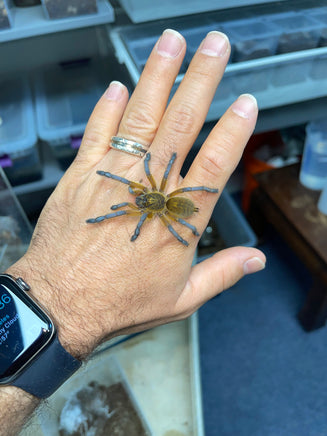
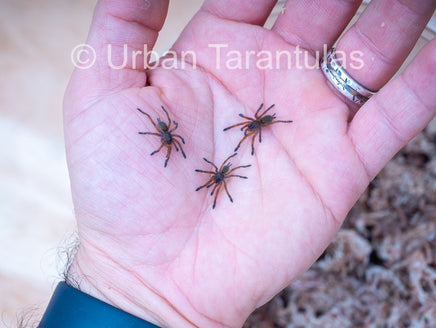
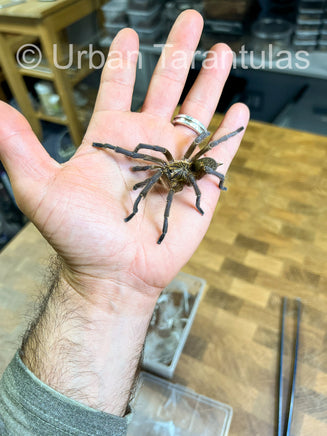
Harpactira Pulchripes - Golden Blue Leg Baboon (Young Adult Female) - UrbanTarantulas

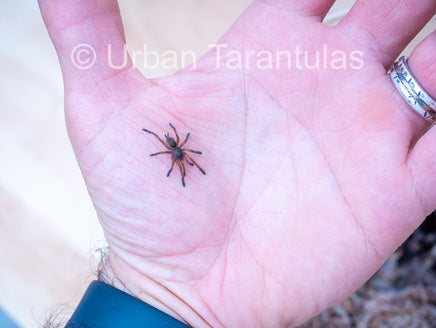
Harpactira Pulchripes - Golden Blue Leg Baboon Tarantula

$250.00 
Chooe below
Harpactira pulchripes — Golden Blue Leg Baboon

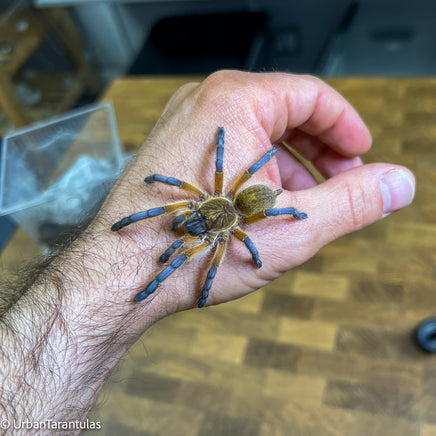
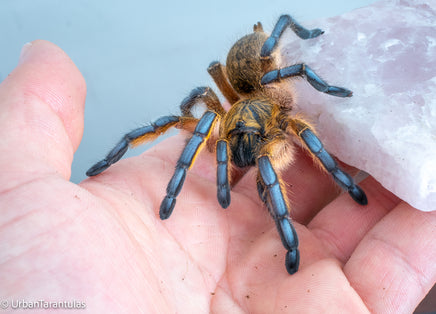
This is hands-down one of the absolute best Old World tarantulas to start with. Alongside Monocentropus balfouri, Harpactira pulchripes is often considered the most approachable Old World species available. They’re shockingly chill for a baboon spider, grow fast, and are completely unreal in person — electric blue legs paired with a golden carapace. One of my favorite Old Worlds to keep and recommend.

⭐ Special Notices
I highly recommend checking out my YouTube channel for care, enclosure setups, feeding demos, and real-life behavior so you can see exactly how I keep and feed my tarantulas.

▶️ Visit Urban Tarantulas on YouTube
🧼 Care Details
🌡️ Temperature 75–85°F (24–29°C)
💧 Humidity ~50–60%. Keep substrate mostly dry with good ventilation.
🏠 Housing
Babies 1–4 oz deli container with deep dry substrate and starter burrow.
Juveniles Enclosure 2–3× leg span with cork hide and compacted substrate.
Adults Terrestrial enclosure with deep diggable substrate; sturdy hide preferred.
🍽️ General Diet
Crickets and roaches (Dubia, Red Runner, Lobster, Madagascar Hissing). Babies take baby crickets or small roaches. If prey is too large, pre-kill by crushing the head. Remove leftovers and bolus.

For very large specimens only: an occasional pinky or hopper mouse or feeder lizard — extremely sparingly. Excess calcium can cause constipation. We never use pinhead crickets due to low protein value.
🔍 In-depth Facts
🕷️ Latin name Harpactira pulchripes
📛 Common name(s) Golden Blue Leg Baboon
📍 Locale South Africa
🏷️ Category Terrestrial / Fossorial, heavy webber
📏 Size ~6–7" DLS (female larger than male)
🪶 Urticating hairs None (Old World species)
⏳ Growth rate Fast
🧭 Life span Female ~15–18 yrs / Male ~4–5 yrs
🎯 Recommended levels Beginner-friendly Old World / Intermediate+
🎁 Follow me on social media
🎁 Follow me on social media and receive an additional freebie*
*Email me after you follow to let me know you’re a follower so I can include it.

Instagram YouTube Palmstreet Facebook TikTok
⚠️ Safety Disclaimer
Safety Disclaimer: Experiencing a tarantula bite is an extremely rare occurrence, and it's important to note that there have been NO recorded fatalities due to a tarantula bite. The venom potency varies across species, with Old World tarantulas generally having stronger venom than their New World counterparts. Within the Old World category, the Poecilotheria genus is known for having particularly potent venom.

It's crucial to approach tarantulas with respect and understanding. If you happen to get bitten, which is unlikely, the key is to stay calm. In most cases, the discomfort is superficial and subsides within a few minutes to a few hours. However, bites from species with more potent venom may result in symptoms lasting up to a week. Remember, larger tarantulas tend to have more venom than smaller ones.

Please be aware that I cannot assume responsibility for bites. Tarantula handling should be done at your own risk. In my 13 years of experience with these creatures, I have only been bitten once, by a species with highly potent venom. While the experience was painful, the symptoms had completely disappeared after a week.

Handle tarantulas responsibly, and always prioritize your safety and the well-being of the tarantula.