| 📣 Special Notices |
| Watch how I care for my Poecilotheria species on my YouTube channel . You’ll find detailed videos on enclosure setups, feeding, and handling techniques for fast-moving ornamentals like P. rufilata. |
| 🌿 Care Details |
| 🌡️ Temperature |
75–85°F (24–29°C) |
| 💧 Humidity |
75–80%, with moderate airflow and good ventilation |
| 🏠 Housing |
| Babies |
5" tall × 2" vial; light misting every few days; strong cross-ventilation. |
| Juveniles |
8–10" tall arboreal container with cork bark tube and web anchor points. |
| Adults |
14–18" tall arboreal enclosure with vertical bark or branches and secure lid; prefers height and shelter. |
| 🍽️ General Diet |
| Crickets and roaches (Dubia, Red Runner, Lobster). Offer pre-killed prey to small slings. Adults are voracious feeders—offer large roaches weekly. Always remove uneaten food within 24 hours. Avoid pinhead crickets; they lack nutrition. |
| 📘 In-depth Facts |
| 🕷️ Latin name |
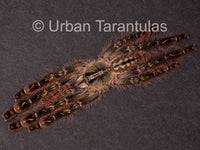
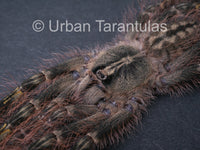
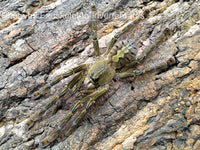
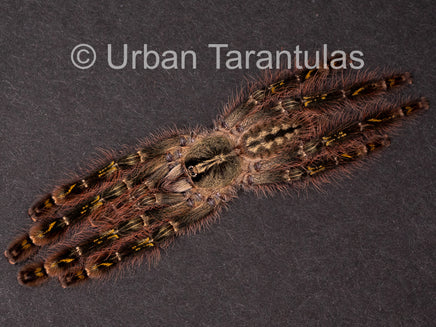
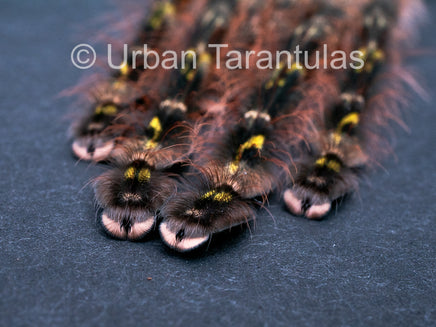
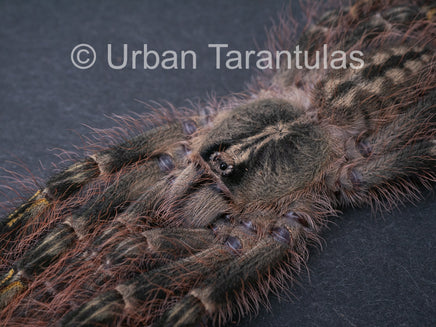
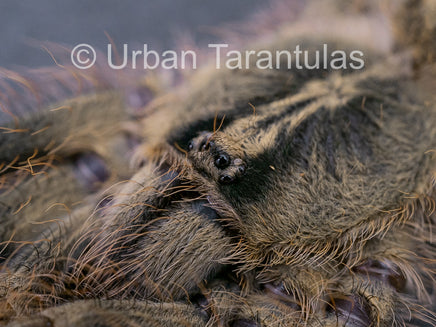
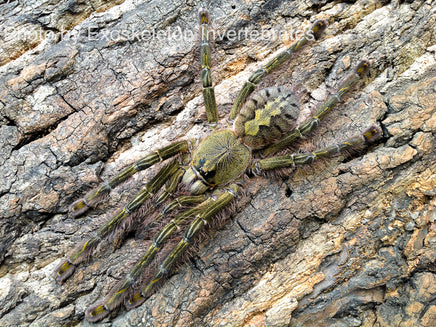
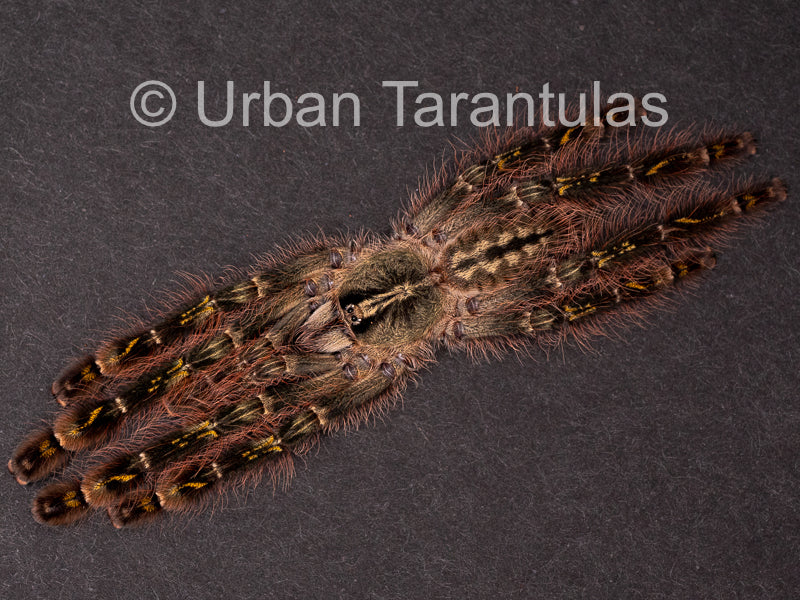
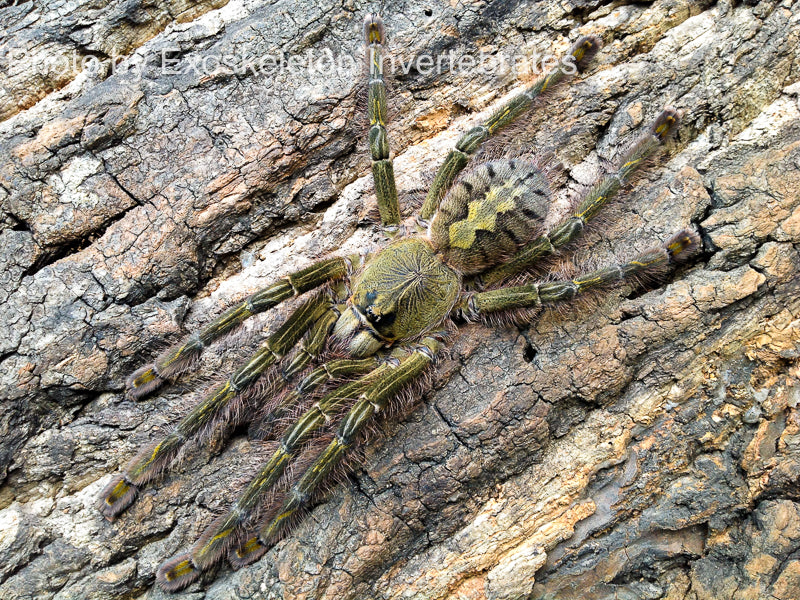
Poecilotheria rufilata |
| 📛 Common name(s) |
Red Slate Ornamental Tarantula |
| 🌡️ Temperature |
75–85°F (24–29°C) |
| 💧 Humidity |
75–80% |
| 📍 Locale |
Southern India, Western Ghats rainforest |
| 🏷️ Category |
Arboreal; defensive; heavy webber |
| 📏 Size |
Up to 8–9" (DLS), very leggy and elegant |
| 🪶 Urticating hairs |
None – relies on speed and venom potency |
| ⏳ Growth rate |
Fast |
| 🧭 Life span |
Females 12–15 years; males ~3–4 years |
| 🍽️ Feeding |
Eager feeder; large roaches, adult crickets, occasional locust |
| 🎯 Recommended levels |
Lovers of pokies |
| 🎁 Follow me on social media |
🎁 Follow me on social media and receive an additional freebie* *Email me after you follow to let me know you’re a follower so I can include it.
|
| ⚠️ Safety Disclaimer |
Safety Disclaimer: Experiencing a tarantula bite is an extremely rare occurrence, and it's important to note that there have been NO recorded fatalities due to a tarantula bite. The venom potency varies across species, with Old World tarantulas generally having stronger venom than their New World counterparts. Within the Old World category, the Poecilotheria genus is known for having particularly potent venom.
It's crucial to approach tarantulas with respect and understanding. If you happen to get bitten, which is unlikely, the key is to stay calm. In most cases, the discomfort is superficial and subsides within a few minutes to a few hours. However, bites from species with more potent venom may result in symptoms lasting up to a week. Remember, larger tarantulas tend to have more venom than smaller ones.
Please be aware that I cannot assume responsibility for bites. Tarantula handling should be done at your own risk. In my 13 years of experience with these creatures, I have only been bitten once, by a species with highly potent venom. While the experience was painful, the symptoms had completely disappeared after a week.
Handle tarantulas responsibly, and always prioritize your safety and the well-being of the tarantula. |