| 🦂 Special Notices |
This species is a medically significant scorpion and should only be kept by experienced keepers who understand scorpion behavior and safe enclosure practices. Use secure, escape-proof housing with careful maintenance routines. Check out our care, setup, feeding, and show-and-tell videos on our channel:
Visit Urban Tarantulas YouTube
|
| 🌿 Care Details |
| 🌡️ Temperature |
75–85°F (24–29°C). Warmer temperatures usually mean faster metabolism and growth, but avoid excessive heat. |
| 💧 Humidity |
Around 60–70% with good ventilation. Avoid swampy conditions and avoid letting the enclosure become bone dry. |
| 🏠 Housing |
| Babies |
Small secure containers with ventilation and enough substrate to allow hiding. A simple, escape-proof setup is ideal. |
| Juveniles |
Use a small enclosure with ventilation, a hide, and substrate suitable for burrowing behavior. |
| Adults |
Provide an enclosure several times the scorpion’s body length with secure ventilation, hides, and appropriate substrate depth. |
| 🍽️ General Diet |
| We feed crickets and roaches including Dubia, Red Runner, and Lobster roaches. Babies can eat baby crickets and baby roaches. |
| 📚 In-depth Facts |
| 🕷️ Latin name / Scientific name |
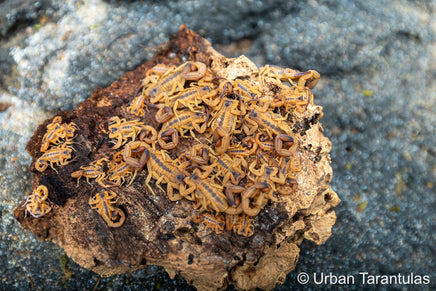
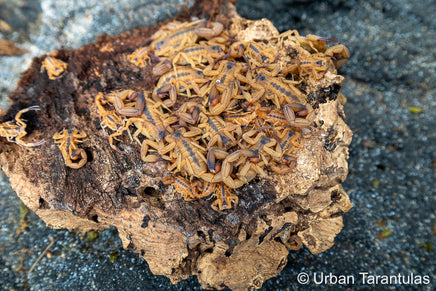
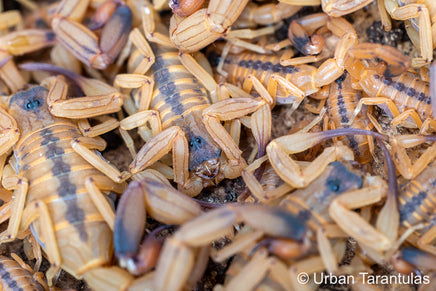
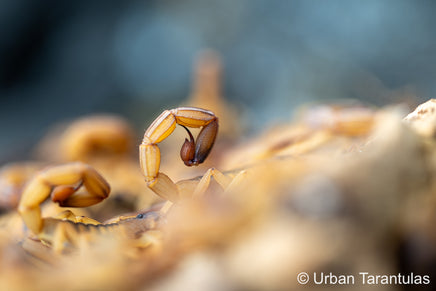
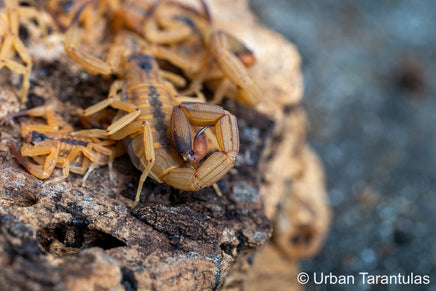
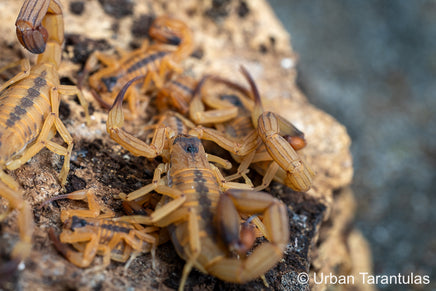
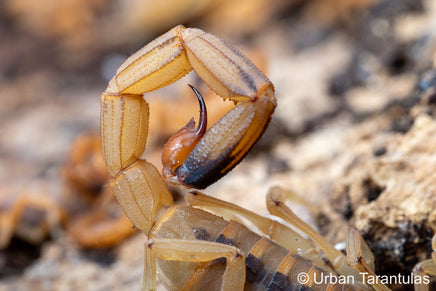
Tityus stigmurus |
| 📛 Common name(s) |
Brazilian Yellow Scorpion, Brazilian Yellow Scorpion |
| 🌡️ Temperature |
75–85°F (24–29°C) |
| 💧 Humidity |
Moderate humidity around 60–70% with strong ventilation. |
| 📍 Locale |
Brazil, especially northeastern regions. |
| 🏷️ Category |
Terrestrial, burrowing scorpion with active hunting behavior. |
| 📏 Size |
Usually around 2–3 inches in total length. |
|
|
| ⏳ Growth rate |
Fast compared to many arachnids, with growth influenced by temperature and feeding. |
| 🧭 Life span |
Approximately several years, depending on care and conditions. |
| 🍽️ Feeding |
Crickets and roaches are the primary diet. |
| 🎯 Recommended levels |
Best suited for scorpion lovers |
| 🎁 Follow me on social media and receive an additional freebie* |
*Email me after you follow to let me know you’re a follower so I can include it.
Instagram YouTube Palmstreet Facebook TikTok
|
| ⚠️ Safety Disclaimer |
Safety Disclaimer: Tarantula bites are extremely rare, and there are no recorded human fatalities. Venom strength varies by species; Old World tarantulas are usually more potent than New World tarantulas, with Poecilotheria known for especially strong venom. Larger tarantulas may also deliver more venom.
If bitten, stay calm. Most symptoms fade within minutes to hours, though potent species may cause discomfort for up to a week. In 13 years, I’ve only been bitten once, and symptoms were gone after one week.
Handling is at your own risk. I’m not responsible for bites or injuries. Always prioritize your safety and the tarantula’s well-being. |