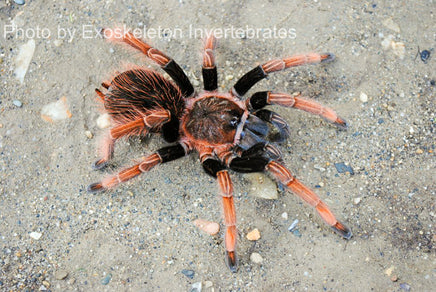
| Special Notices |
This is a terrestrial species that appreciates a secure setup with enough substrate to dig, anchor webbing, and feel protected. Give babies and juveniles snug enclosures with good ventilation, a hide or starter burrow, and slightly moist areas without making the enclosure swampy.
For care, setup, feeding, and show-and-tell videos, check out my YouTube channel here: Urban Tarantulas on YouTube. |
| Care Details |
| 🌡️ Temperature |
75–85°F (24–29°C). Warmer temperatures usually mean faster growth because they molt more often. |
| 💧 Humidity |
Keep around 75–80% inside the enclosure with good airflow. I like a lightly moist substrate zone, not swampy and not bone-dry. |
| 🏠 Housing |
| Babies |
1–4 oz deli cup with needle ventilation and a little extra substrate for security. FREE container at checkout IF requested; not included otherwise. |
| Juveniles |
Use an enclosure about 2–3x the spider’s body size, with enough substrate to dig and a hide or cork bark starter retreat. |
| Adults |
A secure terrestrial enclosure with good floor space works best. I prefer deeper substrate, a sturdy hide, and a water dish for larger specimens. |
| General Diet |
| 🍽️ Crickets + roaches are the staple diet, including Dubia, Red Runner, and Lobster roaches. Babies take baby crickets or small roaches. If prey is too big, pre-kill it by crushing the head, leave it for the tarantula, then remove leftovers or bolus later. For super large specimens, an occasional pinky/hopper mouse or feeder lizard can be offered very sparingly; excess calcium can cause constipation/pooping issues. We never use pinhead crickets because they do not provide enough protein. |
| In-depth Facts |
| 🕷️ Latin name / Scientific name |
Sericopelma sp. “Santa Catalina” |
| 📛 Common name(s) |
Santa Catalina Tarantula |
| 🌡️ Temperature |
75–85°F (24–29°C) |
| 💧 Humidity |
75–80% with ventilation; keep substrate lightly moist in part of the enclosure |
| 📍 Locale |
Santa Catalina, Panama |
| 🏷️ Category |
Terrestrial, opportunistic burrower, moderate webbing around retreats |
| 📏 Size |
Females can reach roughly 7 to 8in+ in DLS; males are usually smaller and leggier |
| 🪶 Urticating hairs |
Yes. As a New World terrestrial, it may kick urticating hairs when disturbed, but rarely do. |
| ⏳ Growth rate |
Medium to fairly fast when kept warm and fed consistently |
| 🧭 Life span |
Females may live around 12–18+ years; males usually mature much sooner and live a shorter adult life |
| 🍽️ Feeding |
Usually a strong eater. Offer appropriately sized crickets or roaches and remove uneaten prey. |
| 🎯 Recommended levels |
Great for keepers who enjoy hardy New World terrestrials with size, appetite, and a more bold display personality. |
| Follow me on social media |
|
🎁 Follow me on social media and receive an additional freebie*
*Email me after you follow to let me know you’re a follower so I can include it.
Instagram YouTube Palmstreet Facebook TikTok
|
| Safety Disclaimer |
Safety Disclaimer: Tarantula bites are extremely rare, and there are no recorded human fatalities. Venom strength varies by species; Old World tarantulas are usually more potent than New World tarantulas, with Poecilotheria known for especially strong venom. Larger tarantulas may also deliver more venom.
If bitten, stay calm. Most symptoms fade within minutes to hours, though potent species may cause discomfort for up to a week. In 13 years, I’ve only been bitten once, and symptoms were gone after one week.
Handling is at your own risk. I’m not responsible for bites or injuries. Always prioritize your safety and the tarantula’s well-being. |